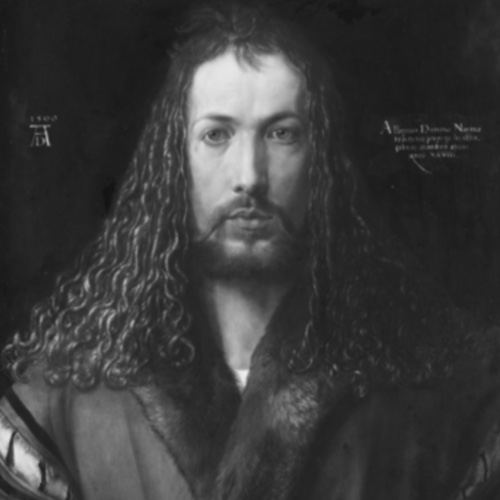
The son of a Nuremberg (1), this individual transformed art in the German-speaking world by travelling to Italy and bringing Renaissance ideas home. No northern European artist of their time applied (2) principles to art as systematically or as brilliantly.
Their most significant contribution was not any single painting but the (3) of printmaking into a serious art form. Through woodcuts and engravings of extraordinary detail and technical (4), they produced images that could be widely reproduced and distributed, effectively making them one of the first artists to reach a mass (5).
Their engravings, dense with symbolic detail, remain among the most studied works in the history of Western art. A (6) they used to sign their work, two letters intertwined, became one of the most recognisable artist signatures in history and was widely copied and forged during their lifetime.
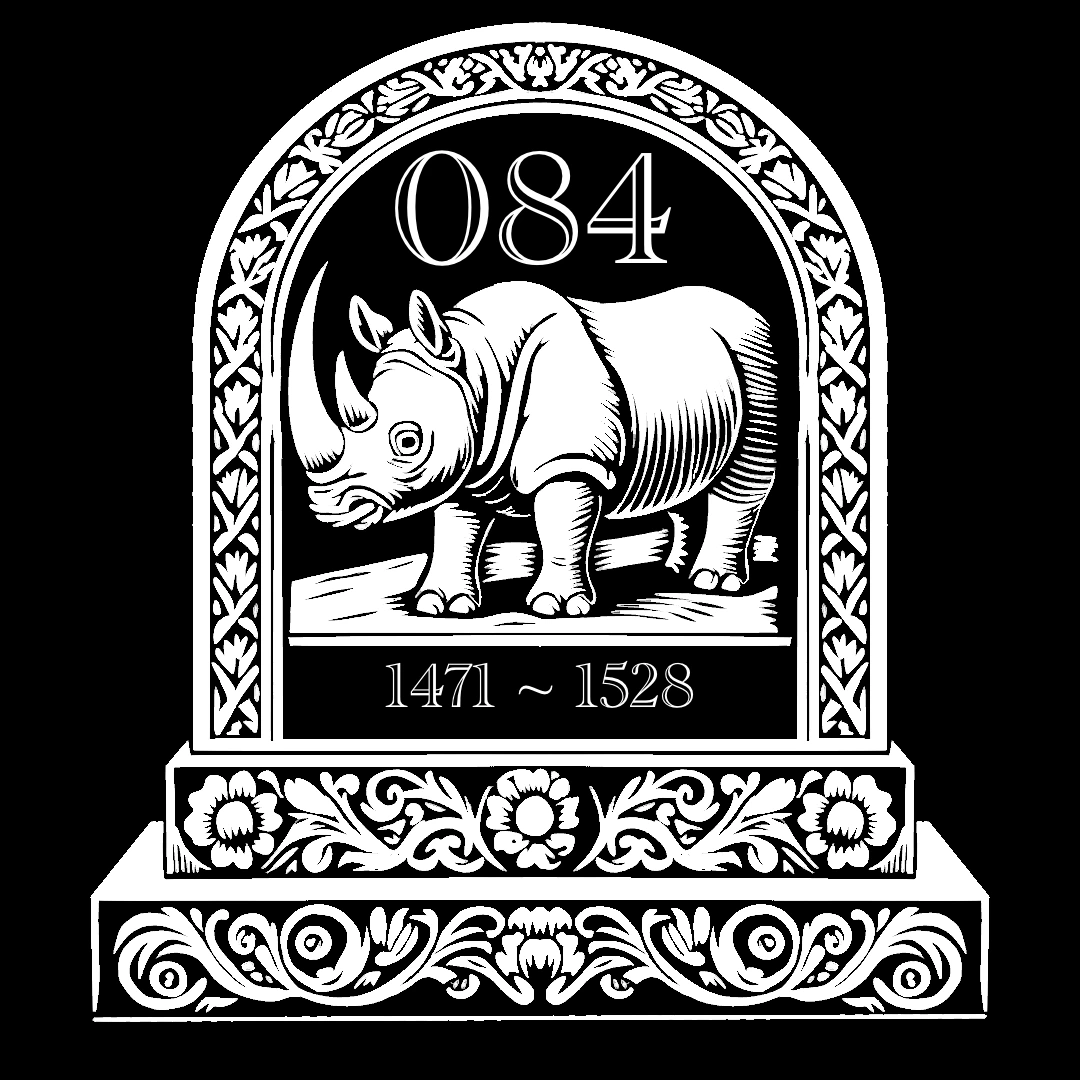
Among their most celebrated works are a deeply (7) engraving depicting a winged figure surrounded by the tools of geometry and craft, and a dramatic scene showing a mounted (8) riding calmly past the figures of Death and the Devil. They also produced a famous woodcut of a rhinoceros based entirely on a written (9), having never seen the animal themselves. Despite its anatomical inaccuracies, it remained the most widely reproduced image of the animal in Europe for over two centuries.
They also wrote extensively, producing treatises on geometry, human proportions and perspective that helped establish the theoretical foundations of northern European art.
They died in Nuremberg in 1528 at the age of 56, leaving behind a body of work that bridged the medieval and modern worlds and influenced artists across (10) Europe for generations.
Now check your answers:
Who is this baiography about?
If you don't know their identity, click:
▶ Click to show the transcript and the correct answers.
The son of a Nuremberg (1) goldsmith, this individual transformed art in the German-speaking world by travelling to Italy and bringing Renaissance ideas home. No northern European artist of their time applied (2) mathematical principles to art as systematically or as brilliantly.
Their most significant contribution was not any single painting but the (3) elevation of printmaking into a serious art form. Through woodcuts and engravings of extraordinary detail and technical (4) precision, they produced images that could be widely reproduced and distributed, effectively making them one of the first artists to reach a mass (5) audience.
Their engravings, dense with symbolic detail, remain among the most studied works in the history of Western art. A (6) monogram they used to sign their work, two letters intertwined, became one of the most recognisable artist signatures in history and was widely copied and forged during their lifetime.
Among their most celebrated works are a deeply (7) symbolic engraving depicting a winged figure surrounded by the tools of geometry and craft, and a dramatic scene showing a mounted (8) knight riding calmly past the figures of Death and the Devil. They also produced a famous woodcut of a rhinoceros based entirely on a written (9) description, having never seen the animal themselves. Despite its anatomical inaccuracies, it remained the most widely reproduced image of the animal in Europe for over two centuries.
They also wrote extensively, producing treatises on geometry, human proportions and perspective that helped establish the theoretical foundations of northern European art.
They died in Nuremberg in 1528 at the age of 56, leaving behind a body of work that bridged the medieval and modern worlds and influenced artists across (10) northern Europe for generations.
▶ Click to show questions for discussion.
This individual brought Renaissance ideas from Italy back to northern Europe. Do you think artistic and intellectual ideas still travel between cultures in the same way today?
They elevated printmaking into a serious art form by producing images that could be widely reproduced. Do you think reproducibility makes art more or less valuable?
Their monogram became so recognisable that it was widely forged during their lifetime. Do you think an artist's signature can become as valuable as the work itself?
They wrote treatises on geometry, proportion and perspective alongside producing art. Do you think the best artists are always also theorists and thinkers?
Their work bridged the medieval and modern worlds. Do you think there are artists working today whose work will be seen as similarly transitional by future generations?